
Three Ways Faith May Increase Our Happiness

Three Ways Our Faith May Increase Our Happiness
Several years ago a study was conducted to measure the so-called “Happiness Index” of men and women. Pollsters asked several hundred people of both sexes to name activities they routinely did, whether it was running errands at the grocery store or picking up kids from school. Additionally, the respondents were asked to describe how they felt as they executed each activity. One of the activities common to both groups was spending time with parents. Men enjoyed the activity more than women, the former seeing it as “bonding”, and the latter as “feeling like work”.
After tabulating the results, pollsters came across some surprising results: there is a growing “happiness gap” between men and women.
Are men “happier” than women? And if so, why? I decided to look at that question from a counter-cultural perspective; that is, if one inserts faith as a barometer of happiness, how would the sexes fare? Happiness, though, is an elusive quality and, obviously, is relative to not only how one perceives happiness, but where one experiences happiness via their social and economic location.
So, to narrow the question, I wondered: Are Christian men happier men? There are not tons of research from which we can deduce an answer, but there are studies that point to increased levels of happiness among people of faith as opposed to the “religiously unaffiliated”.
Here is one thing for certain: Faith is an undeniable factor in how we respond to the challenges of life. The better (or more efficiently) we respond to our challenges as men, the higher our “happiness quotient”, according to studies.
Yet secular studies are not the only source-proofing in this regard.
It has been noted, and research conducted by the author Patrick Glynn, appears to prove that a faith-based, spirit-grounded lifestyle is good for both our physical and mental well-being. In other words, as men, we tend to respond better to our life challenges when we do so from foundation of faith and belief.
Patrick Glynn is the author of God, The Evidence: The Reconciliation of Faith and Reason in a Post-Secular World, published in 1999.
Glynn persuasively argues that “at its heart is the dawning realization that the universe, far from being a sea of chaos, appears instead to be an intricately tuned mechanism whose every molecule, whose every physical law, seems to have been designed from the very first nanosecond toward a single end – the creation of life.”
Order, design and life in the spirit are the pillars of faith in the unknown. The faith we are in possession of – indeed which possesses us – is the stuff we use to make sense of what is not always evidentiary. What we ‘believe’ may actually conspire to increase our level of happiness. ‘Faith’ spoken of here is not denomination, it is personal creed, it is personal devotion and it is grounded in a personal relationship with a Higher Power.
Life is first and inner experience. All of the peace and security we are seeking is within us, writes Susan L. Taylor, former Editor-At-Large at Essence Magazine.
This ‘inner experience’ has its fair share of benefits; thus, when we engage it, we come out of it better men.
Here are three ways our faith may increase our happiness.
We Handle Stress Better
Life in the spirit equips a person to handle stress more effectively. According to Glynn, high levels of faith commitment correlate with lower levels of depression and stress, and give us a greater ability to cope with stress.
When we live in the Spirit, we tend to see our struggle differently than those who do not. We see the end before the beginning; we see success where others may see only failure; we see ourselves a growing through our challenges as opposed to merely just going through them.
We Have Something to Believe In
Established ways of believing contribute to a meaningful experience; when you believe in something – faith, creed, and principle – you extract meaning from it. Indeed, Glynn opines that believers with well-grounded belief systems consistently report greater overall happiness and satisfaction with life and are generally more positive about life.
Faith affords us a dimension of life that flows from direct communion with a Higher Power, a communion nurtured by prayer, ritual, meditation and worship. Faith gives us the centered experience.
We Are Part of Something Bigger
Attaching oneself to a larger cause can be one of the most fulfilling experiences in life. Why? Because when we do so, we discover it’s not all about our self-contained, whimsical desires. One of the areas of my life where I’ve found this to be especially true is in worship and praise. What an experience to come together with others and perform such a beautiful act as worship! Your outlook on your challenge is immensely impacted when you worship with others who face their own obstacles. Indeed, we are able to worship within the confines of home on any given day of worship, but I would argue there’s something missing when we neglect the “assembling of ourselves together”.
In fact, according to Glynn’s findings, people who did not attend church were four times as likely to commit suicide than were frequent attendees. That’s huge. That means we share a not only a common faith, but a common destiny, as well.
The evidence is overwhelming: the greater our faith, the more victorious we live our lives.
Personally, I believe it is crucial to be as consistent as possible in our daily faith walk as men. We’ve got to do the work; we must pray, we must meditate, we must engage in reading and study of Holy Scripture and we must engage in praise and worship communally. So often, as men, we isolate ourselves from others, attempting to rely on our individual strength and acumen.
We are not islands. We are social creatures. We serve a Higher Purpose and calling as leaders of our families and communities. We must nurture our faith daily.
Faith is an undeniable factor in facing the challenges of life.
Pastor W. Eric Croomes can be reached at PastorCroomes@Outlook.com and on Facebook @PastorWEricCroomes

Four Ways the Weak May Say ‘I Am Strong’.
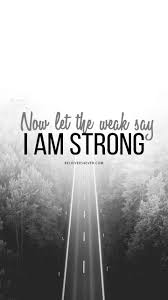
Have you ever felt “weak”? Have you ever felt you were in a situation in which winning didn’t appear to be an option? Are you there now? The truth is we’ve all experienced what I call ‘losing seasons’, times in which everything that could go wrong – did go wrong! From relationships, to money, to career, we’ve all been weak. The good news is even when we are weak, we have the power to transform our thinking by a simple declaration.

The writer of the book Joel says, “Let the weak say I am strong.” Seven powerful words that can transform your reality. Even when I’m losing I’m winning!
But what if we could attach even more empowering and practical action steps behind those words? How much of a difference would it make to not only say ‘I am strong’ but also to act as if I am strong – in the words I use, the steps I take and the thoughts I freely choose to think?
We can believe ourselves to be anything we want. If you are feeling lost, confused, forsaken by any circumstance in your life, use these four steps to reverse your thinking and call into your life a feeling of strength and renewal.
Take Control of Your Thoughts
When you awaken to a new day, take immediate control of your thoughts – regardless of your situation. The human brain is wired to hold on to previous actions and results; it automatically shoves the positive to the back and moves everything negative – thoughts, experiences, words – to the front.
Think optimistic. What good does thinking negative thoughts do? I hear people say, “I think realistically.” If thinking realistically means pondering the unfortunate, ruminating on disaster and reflecting on why you won’t be successful, then it’s time to change that dynamic!
Forget Yesterday
This is connected to taking control of your thoughts. We must learn to put the past behind us. Otherwise we become trapped in its history. James Baldwin was spot on when he opined, We are trapped in history and history is trapped in us. Yesterday’s mistakes are today’s building blocks. Develop a negative into a positive. Transform a blunder into a blessing. But do not allow yourself to remain trapped in yesterday. The best is yet to come!
Talk to Yourself Daily
Once upon a time it was considered “crazy” to talk to oneself. These days, though, if you aren’t talking to yourself – encouraging yourself, affirming your value, lifting your self-talk – you are CRAZY! The fact is our culture is so spatially and visually connected, so bent on driving home the latest advertisement that we cannot help but be affected by all of the negative chatter. You must counter that chatter with positive self-talk. Say to yourself daily, “I am strong”. “I am powerful”. “I am beautiful”.
Read Positive
Not only talk positive, but read positive, too. Reading positive could be as simple as reading and or reciting a Bible verse or memorizing a positive quote and audibly actualizing it all day long. The brain operates on repetition; it becomes what it is most exposed to the most. Earl Nightingale put it best, We become what we think. Not only we what think, but what we read, what we watch, what we listen to and what we expose ourselves to the most.
Even when I’m losing I’m winning!

Negative Influences Alert!

How do we as believers stay positive, upbeat and ready to conquer the challenges before us? How do we stay “in the ready” – for all of the half-truths, stereotypes and assumptions that seem to meet and greet us on a daily basis?
We keep our head up! We must stay alert to what is happening around us but, more importantly, what is happening within us. In other words, be on guard, brothers, to what’s going on in your head. This is important for positive self relationship.
There’s a war going on. The Apostle Paul reminds us about the nature of this war: “…for our struggle is not against flesh and blood, but against the rulers, against the authorities, against the powers of this dark world and against the spiritual forces of evil in the heavenly realms.” (Ephesians 6:12 NIV)
The Enemy uses “mental conditioning” to spiritually “de-condition” us as men, the leaders in our homes and community. And the key is that this conditioning is happening in very subtle ways, with people and experiences we don’t really view with any degree of suspicion.
We are being conditioned just about every day of our lives. Some of it is positive but most of the conditioning we are bombarded with is negative. The bottom line is that it’s happening at a level we do not comprehend and, unfortunately, it’s been happening all of our lives.
Here are five sources of negative conditioning and what we can do about it.
Source# 1: Family and Friends
Family members can be potential dream-busters when it comes to ambitions. They may be well-meaning, but they can also become roadblocks. How many times have you been told ‘you can’t or ‘you’re wasting your time’ by a friend or family member?
Solution: The best thing to do is keep a healthy distance (since some of these people may be in the same house!), stay focused and keep believing in your dreams.
Source#2: Local News
Television stations are in a constant war for ratings and to get the most viewers, they must report on what viewers like most: murder, scandal and violence. The real reason the media has made my list, though, is because of the proximity of late local news to bed-time. The sub-conscious mind is most permeable in the minutes before we fall asleep at night. Going to bed with all of the internalized, mostly negative news does nothing but seep down into our deeper mind while we’re asleep.
Solution: In the hour or minutes before bed, try reading a book, doing light exercise and stretching or watching something comical on television.
Source#3: Bad Theology:
As a minister of the Word, this one bothers me the most. I grew up in the church and I relish some fond memories of that time. But truth be told, when you hear over and over how bad you are and how unlovable you appear to be, it takes its toll on your psyche at some point. Not all religious traditions serve parishioners a steady diet of damnation, but far too often we hear about a merciless versus merciful God.
Solution: The good news is you don’t have the fire the preacher! Read and interpret your religious text yourself. Draw your own conclusions. Seek God for guidance within your own personal time with Him.
Source#4: Reality Television
Who knew the advent of reality television would present such convoluted images on a daily basis? Reality TV makes the list due to that one word: images. The conditioning we experience in this regard is the blurring of the line between right and wrong. This is not only bad for the individual, but for society as well – namely because it makes us less emphatic to do something about it. Although images can be a good thing, the kind we see on the tube every day is not so good.
Solution: This is where the power of turning off the television comes in. Just like anything else, watch reality television with moderation.
Source#5: Social Media
Look at social media for what it is: connecting. The question is who and what are you connecting to? Herein lays the issue. It would be great if every person on your Facebook page was an idealistic, positive-centered up-lifter, right? Well, they’re not! Most people Facebook their issues instead of FACING them. That negative energy feeds right into your spirit on a parallel track.
Solution: ‘Un-friend’ kindly or, at the least, take a break from social media.
We must become vigilant to the negative conditioning taking place in our lives and realize that this conditioning happens very often and with great subtlety.
But we are more than conquerors!
Pastor W. Eric Croomes is a motivational speaker and author. You can reach him at PastorCroomes@Outlook.com or
Facebook at Pastor W. Eric Croomes.
My First Blog Post
Be yourself; Everyone else is already taken.
— Oscar Wilde.
This is the first post on my new blog. I’m just getting this new blog going, so stay tuned for more. Subscribe below to get notified when I post new updates.
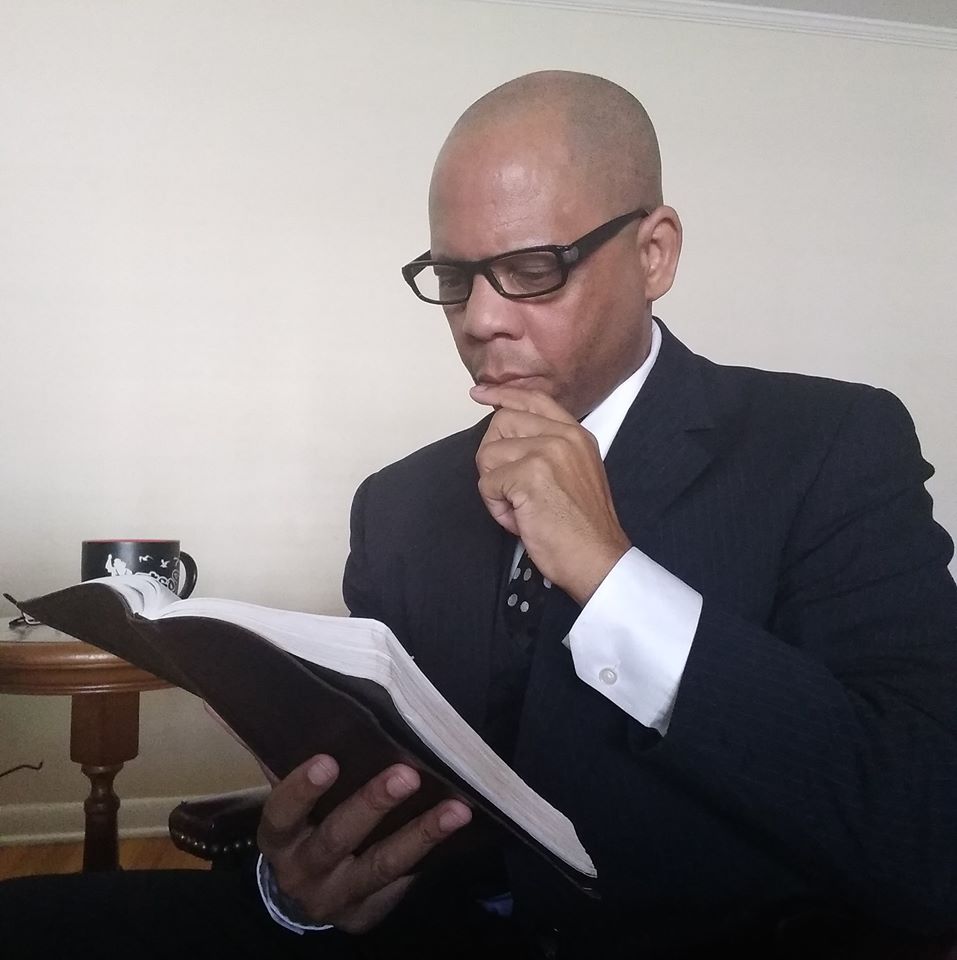
I am Pastor W. Eric Croomes!
Executive Pastor and Coach
My name is Wayne E. Croomes. I am the third son of the Reverends Charley C. and Dorothy J. Croomes! I was created to prosper and succeed; to reveal my talent to the world, to serve humanity, to seek peace, justice and dignity for every person and to live as an expression of God’s infinite peace, wisdom and beauty!
 Inspired Living with Pastor W. Eric Croomes